WatchGuard Primer — One Primer for TPO, EPDM, Concrete, Metal & Wood
WatchGuard Primer is Oak Ridge 7001 Primer under private label: a quick-setting, multi-surface adhesion primer that bonds polyurea and coating systems to single-ply membranes, concrete, metal, and wood — and stops bleed-through from whatever was on the substrate before. It is the product that makes a roof restoration possible instead of a tear-off.
Request 7001 Primer Pricing & DataWhat This Primer Actually Solves
Adhesion to Surfaces That Reject Coatings
TPO, EPDM, and most single-ply membranes are chemically designed to shed things. Polyurea sprayed directly onto them will not hold. 7001 Primer creates the intermediate layer that bonds to both — which is the entire reason a sprayed restoration over an existing single-ply roof is possible at all.
It Stops Bleed-Through
Asphalt, bitumen, old aluminum coatings, oil-stained concrete, tannins in wood, and rust staining all migrate up through a new topcoat and discolor it, sometimes months later. 7001 blocks that migration so the finish coat stays the color you sprayed it.
Quick-Setting — Prime and Coat the Same Visit
A primer that takes overnight to cure costs you a mobilization. 7001 sets fast enough that a crew primes in the morning and membranes in the afternoon on the same setup — which on a large roof is the difference between a two-day job and a three-day job.
One Product Instead of Five
Most coating programs need a different primer for concrete, another for metal, another for single-ply, and another for wood. Carrying one multi-surface primer means less inventory, no wrong-primer mistakes on a mixed-substrate job, and one product to train a crew on.
Substrates 7001 Primer Bonds To
One primer across the substrates a coating crew actually encounters in a week.
- TPO single-ply membrane
- EPDM rubber roofing
- Most other single-ply membranes
- Concrete & masonry
- Steel & galvanized metal
- Aluminum & metal roof panels
- Wood & plywood decking
- Previously coated surfaces
- Asphalt & bituminous surfaces
- Mixed-substrate details & transitions
Where It Goes in the System
Primer is the layer nobody sees and every failure investigation ends up looking at.
Why Adhesion Fails, and What a Primer Is For
A coating stays on a surface through some combination of two mechanisms: mechanical interlock, where it grips into a profile, and chemical or polar attraction between the coating and the substrate. Most coating failures are one of those two mechanisms being absent and nobody checking.
Blasted steel gives you both. A 2–4 mil angular profile is mechanical grip, and clean bare steel is chemically receptive. That is why polyurea on a properly blasted surface reaches pull-off adhesion above 500 PSI and generally does not need a primer.
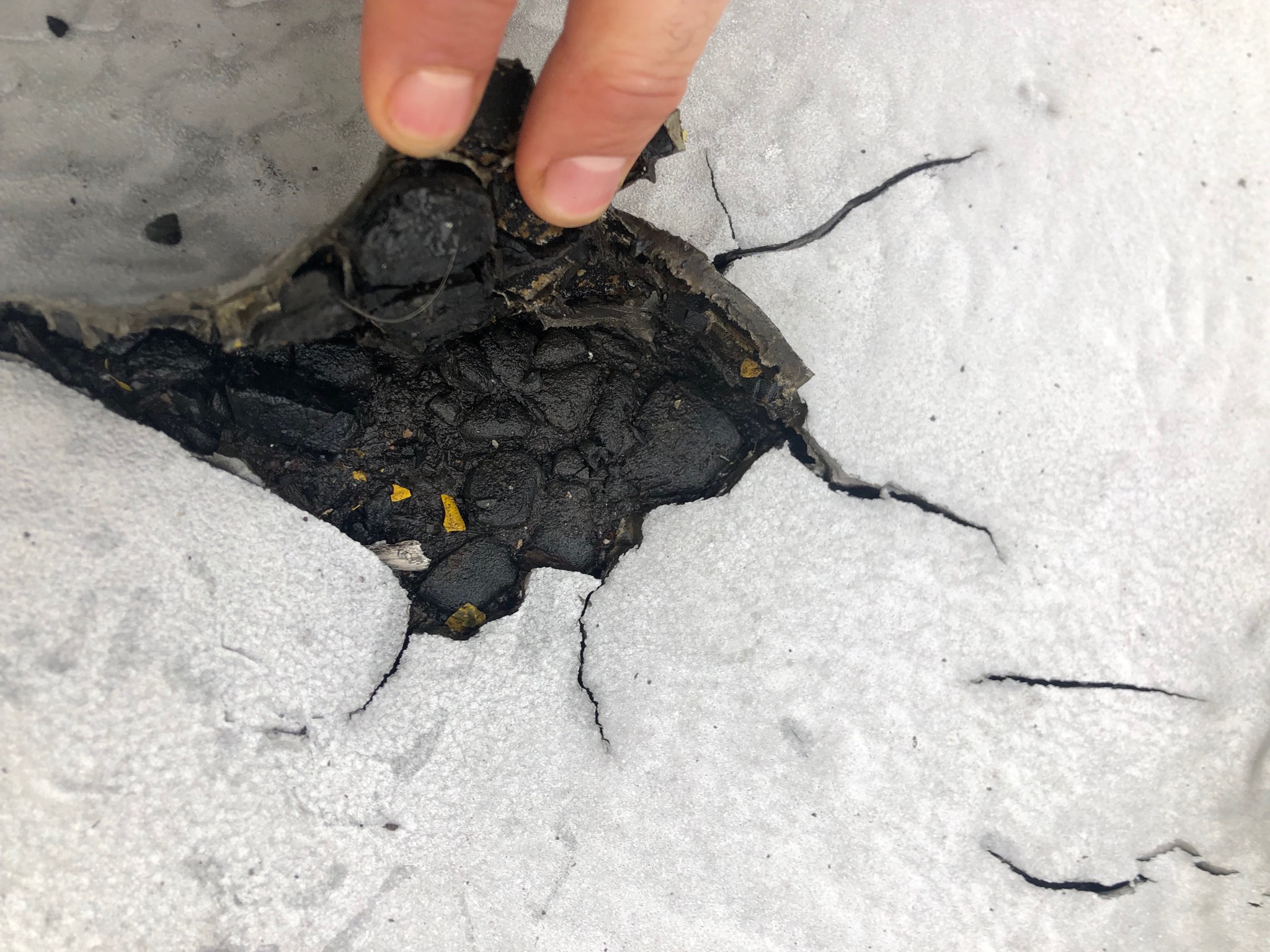
A single-ply membrane gives you neither. TPO and EPDM are smooth, low-surface-energy polymers engineered to shed water, dirt, and biological growth. There is no profile to grip and very little for a coating to bond to chemically. Spray polyurea straight onto weathered TPO and it will peel off in sheets, and it will do it after you have invoiced the job.
That gap is what 7001 Primer fills. It wets out and bonds to the difficult substrate on one side, and presents a surface the polyurea will bond to on the other. It is the intermediary, and on a restoration project it is the single component the entire assembly depends on.
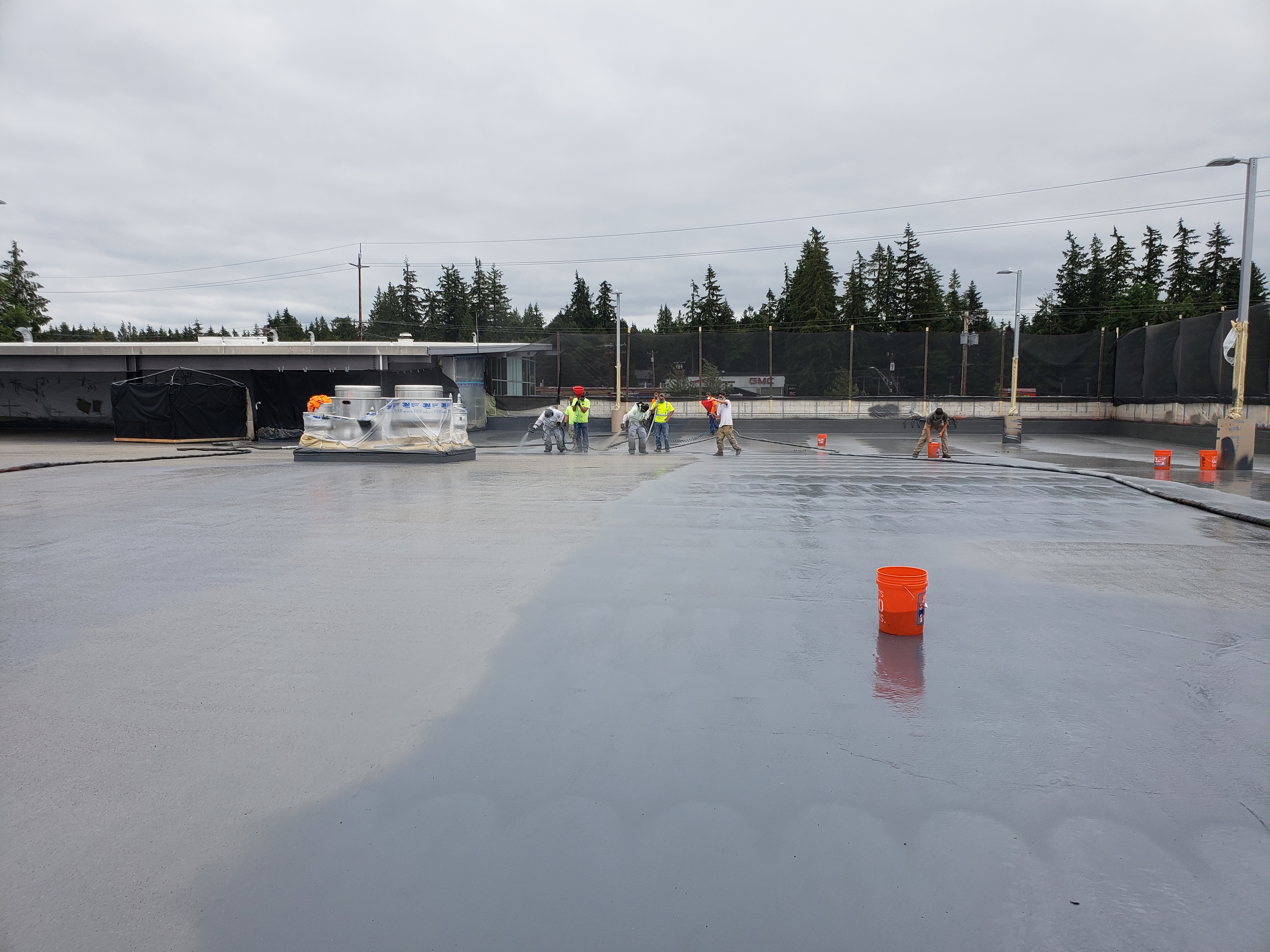
What It Changes
The Bleed-Through Problem Nobody Warns You About
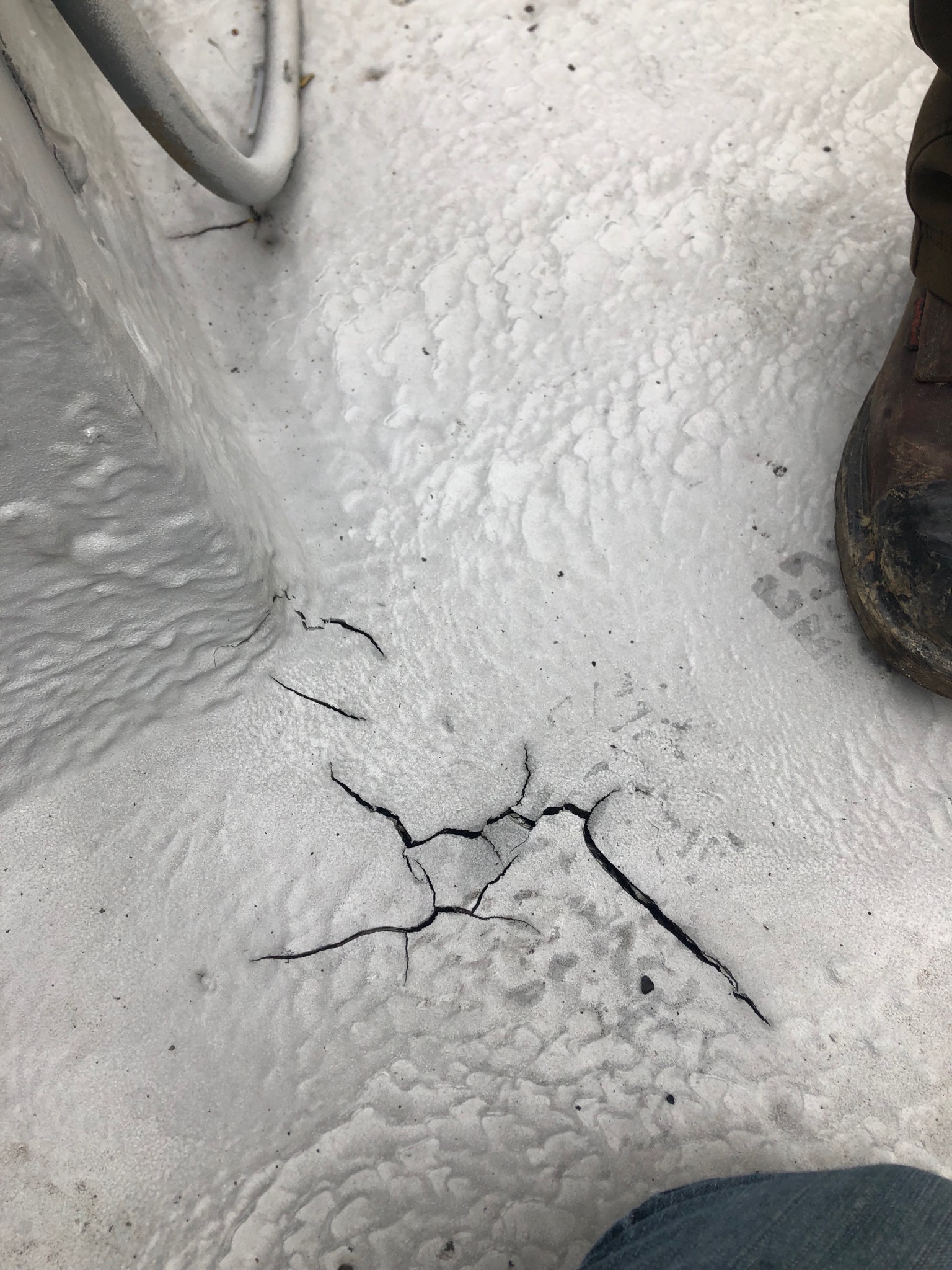
Adhesion failure is dramatic and obvious. Bleed-through is quieter and, commercially, often worse — because the coating is holding perfectly and the customer is still unhappy.
Certain substrate contaminants are mobile. Asphalt and bituminous residue, plasticizers from old coatings, oil driven deep into a shop slab, tannins in wood, and rust staining will migrate upward into a new coating film over time. The job looks correct on the day it is finished. Three weeks later there are brown streaks across a white roof, or amber shadows in the middle of a light-colored floor, and the crew is back on site with no way to fix it except recoating — over the same substrate that caused it.
7001 Primer is formulated to block that migration. On any dark, stained, oil-contaminated, or previously coated substrate that is getting a light-colored finish, priming is not an adhesion decision. It is a colorfastness decision, and it is cheap insurance against a callback you cannot bill for.
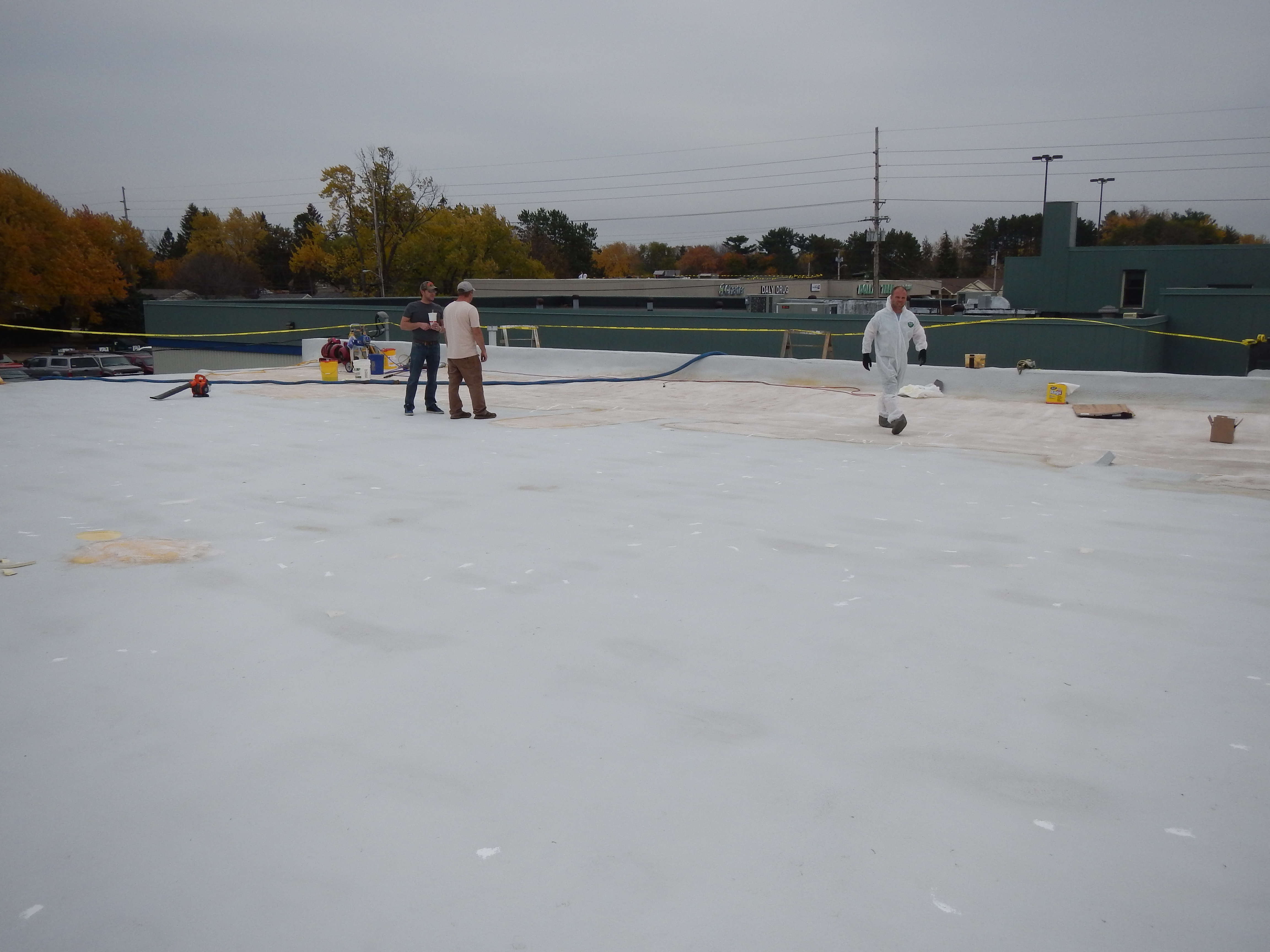
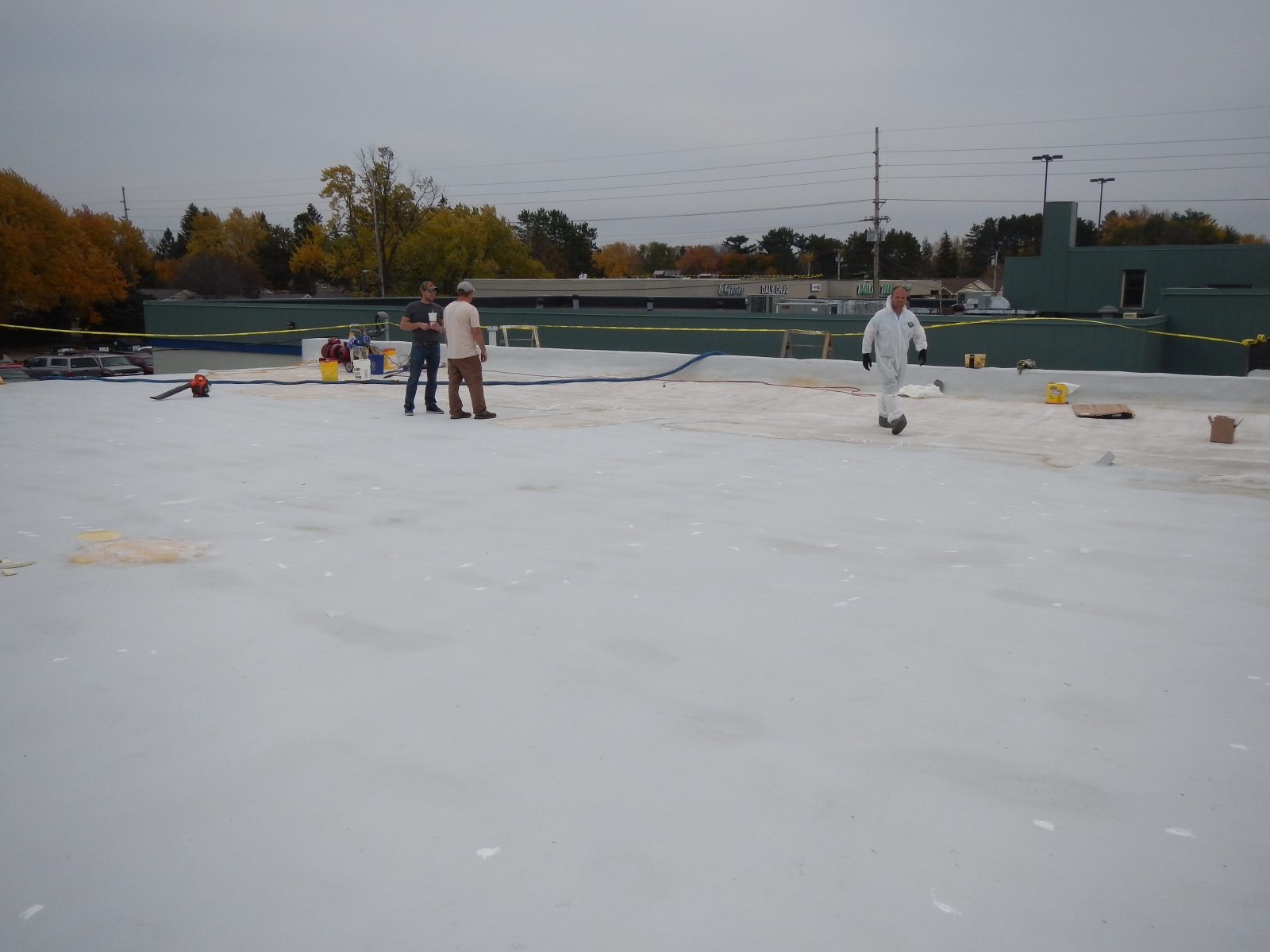
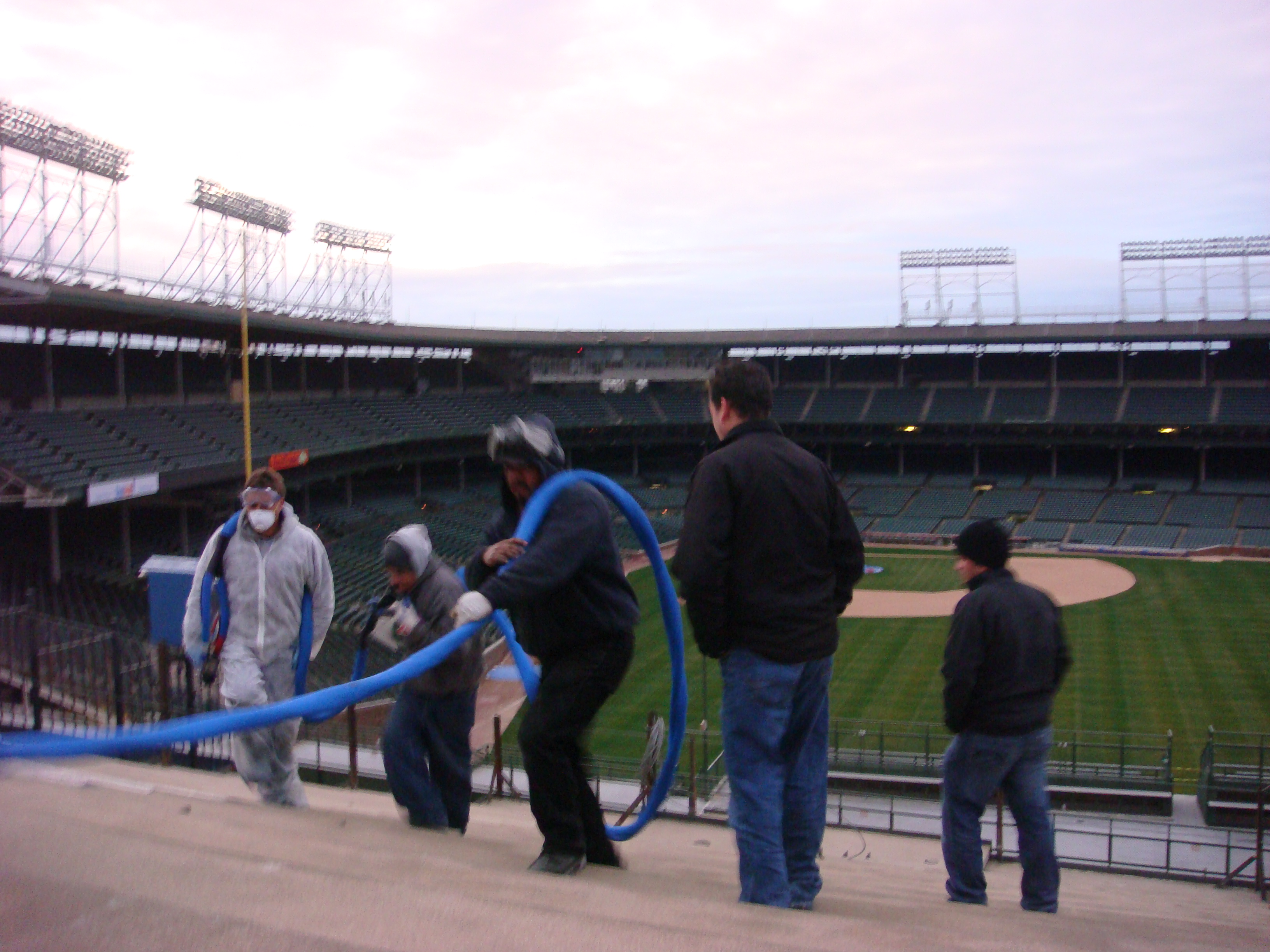
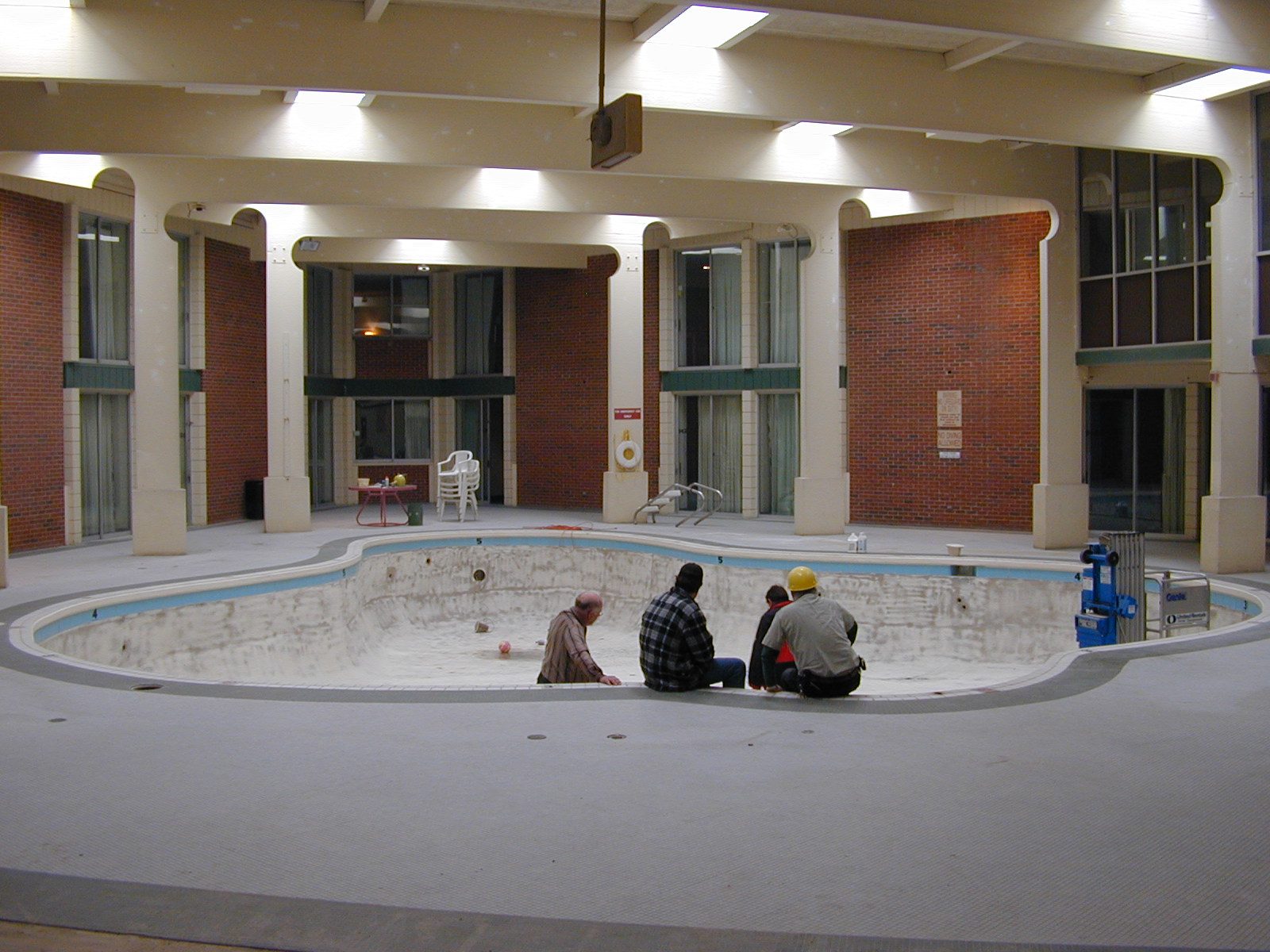
Primed and Coated
Not Sure the Substrate Will Take a Coating?
Tell us what is there — including "we do not actually know what the last guy put on it." That is a normal answer and we have a test protocol for it.
Ask About Your SubstrateRequest 7001 Primer Pricing & Data
Tell us about your project and we will follow up with product details, technical data sheets, and pricing.
Frequently Asked Questions
Frequently Asked Questions
The substrate and adhesion questions we field most often.
Substrates & When to Prime
Which substrates actually require priming?
TPO, EPDM, and other single-ply membranes — always. Galvanized, aluminum, and factory-finished metal panel — yes. Wood — yes, for adhesion and tannin blocking. Asphalt and bituminous — yes, for bleed-through. Concrete — recommended, and required if stained or previously coated. Freshly blasted steel at SP6 with a 2–4 mil profile is the main case where a primer is usually not needed.
Will it really bond polyurea to TPO and EPDM?
That is the primary reason the product exists, and it is what makes single-ply roof restoration possible without a tear-off. Membranes vary by manufacturer, formulation year, and how they have weathered, so run a test patch and pull test on any weathered membrane before mobilizing a crew. Ten minutes of testing is cheap.
Can I skip the primer on blasted steel?
Usually yes. A proper SSPC-SP6 commercial blast with a 2–4 mil angular profile gives polyurea both mechanical interlock and a clean, receptive surface, and pull-off adhesion runs above 500 PSI. Where blasting was not achievable and you are overcoating tight rust after SP3 power-tool cleaning, prime it.
What if nobody knows what coating is already on the surface?
That is a completely normal situation on older buildings. Wash it, abrade it, prime a test area, topcoat it with the actual product, cure it, and pull it. If it releases cleanly at the interface, stop and call us before you commit. Do not bid an unidentified substrate as if it were a known one.
Bleed-Through & Performance
What is bleed-through and why does it matter?
Mobile contaminants in the substrate — asphalt oils, plasticizers from old coatings, oil in a shop slab, tannins in wood, rust staining — migrate upward into a new coating and discolor it, often weeks after the job is finished. The coating is adhered perfectly and the customer is still unhappy. 7001 blocks that migration, which is why it is standard under any light-colored finish over a dark, oily, or previously coated surface.
How much coverage do I get?
It depends heavily on substrate porosity and texture — a smooth membrane consumes far less than an open shot-blasted slab. The technical data sheet gives the coverage rate; ask us and we will help estimate for your specific substrate and square footage rather than have you guess and come up short mid-roof.
How long do I have before I need to topcoat?
Topcoat within the recoat window stated on the technical data sheet — the product is quick-setting, which is what lets you prime and coat in the same mobilization. If you miss the window, abrade the primed surface and re-prime. Do not just spray over it and hope.
Does it work in cold weather?
Within the range on the data sheet, yes — but substrate temperature governs, not air temperature. A concrete slab or a metal deck lags ambient by hours, and dew point matters as much as temperature. Check the surface with an instrument rather than judging by how the morning feels.
Application, Ordering & Private Label
How is it applied?
By roller, brush, or sprayer depending on the surface and the area — no plural-component equipment is needed for the primer itself. On large roofs a sprayer is far faster; on details and transitions a brush gives you the control you want. Apply generously on porous or contaminated substrates and do not spot-prime where bleed-through is a risk.
Can I use it under another manufacturer's topcoat?
Tell us what you are planning to spray over it and we will give you an honest answer. It is formulated and tested under Oak Ridge coatings, and that is where we can stand behind the result. For other combinations, test it — and we will tell you if we think it is a bad idea.
Can I buy just the primer?
Yes. Plenty of contractors buy 7001 on its own because it solves a substrate problem they have and nothing else does. There is no requirement to buy the rest of the line, and we ship any quantity nationwide.
Is it available under my own brand?
Yes. WatchGuard is Oak Ridge's private-label brand and 7001 is available as WatchGuard Primer or under your own name, with the technical data sheet and safety data sheet included. Distributors like it because one multi-surface SKU replaces four substrate-specific ones on the shelf.
Substrate Question We Did Not Cover?
Describe what you are dealing with. You will get a straight answer, including "do not coat that" if that is the right one.
Ask a Question