Applications
The jobs that only work because there is a primer that handles everything on them.
Roof Restoration Without a Tear-Off
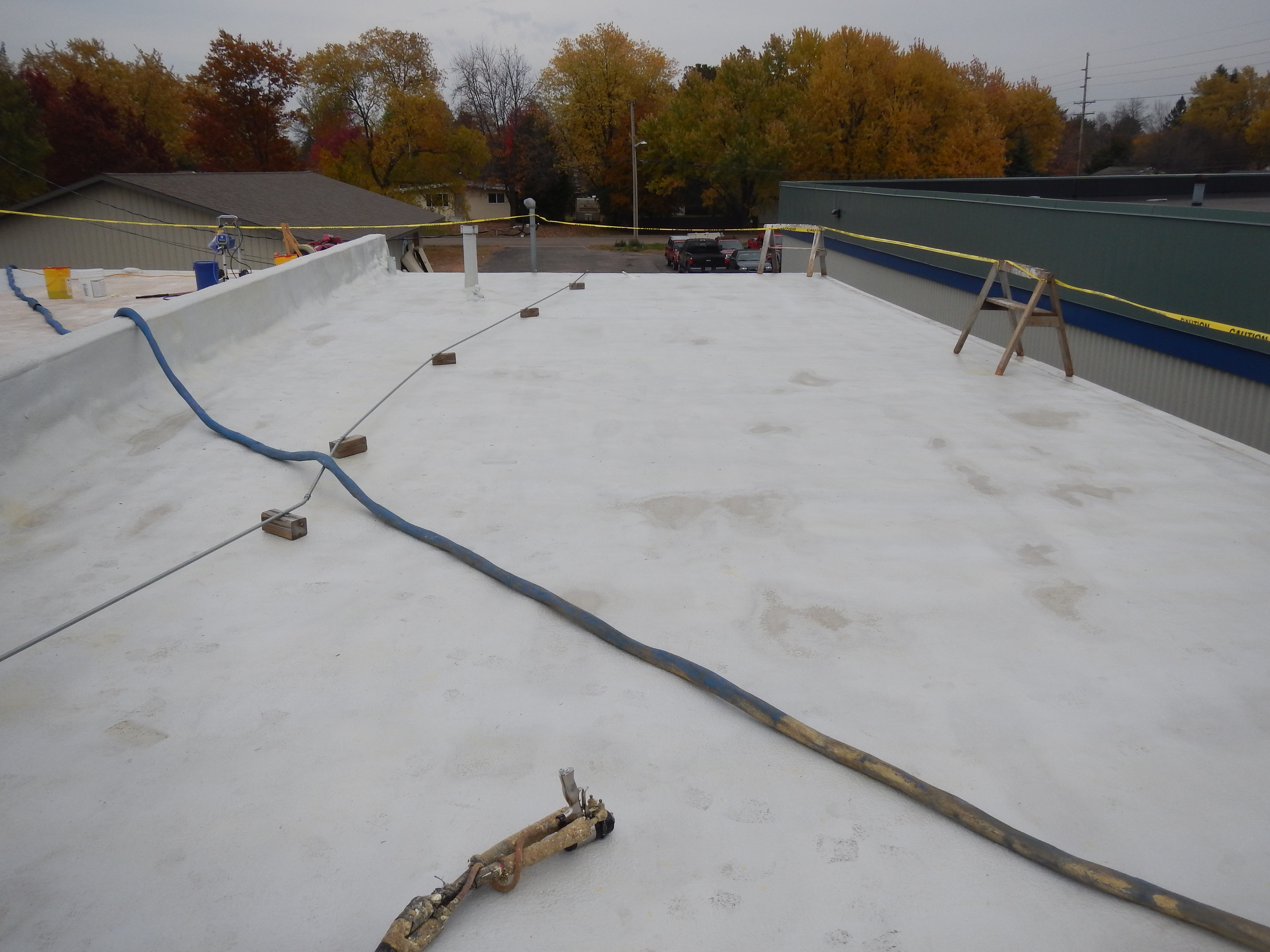
This is the application that justifies the product. A twenty-year-old TPO or EPDM roof is usually sound in the field and failing at the seams and penetrations. A tear-off is a capital project with disposal costs, weather exposure, and disruption to whatever is happening under the roof. A restoration is a maintenance line item that happens over a weekend.
The reason a building owner ever gets to choose the second option is that 7001 Primer will bond a polyurea membrane to a single-ply substrate that would otherwise reject it entirely.
The economics follow from there: no disposal, no deck exposure, no interior disruption, and a seamless membrane that eliminates every seam and penetration detail that was leaking in the first place.
Spec: pressure wash and dry · repair open seams and failed flashings · test patch and pull test · 7001 Primer over the full field and all details · OR-80SLM at 40–60 mil DFT within the recoat window.
Metal Roof Coating & Agricultural Buildings
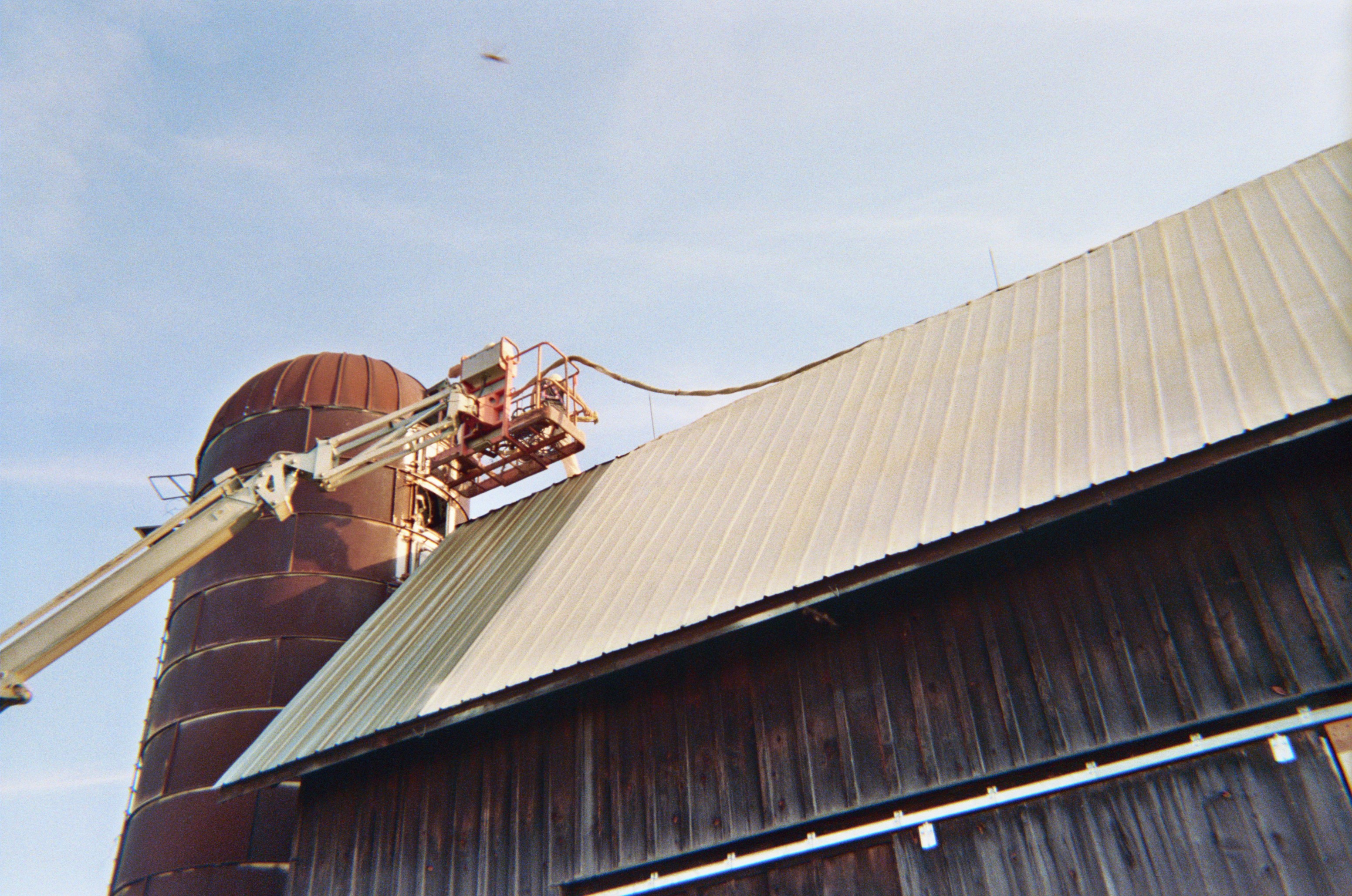
Metal roofs fail from the fastener holes and panel laps outward, and once water is under a panel the corrosion is happening in a place nobody can see or paint.
Coating the roof as a single membrane eliminates every lap and penetration at once — but only if the coating is actually bonded to a factory-finished, mill-oiled, partially oxidized panel. That is a priming problem before it is a coating problem.
On agricultural buildings there is an additional complication: the same roof often has galvanized panel, painted panel, wood blocking, and a concrete parapet all within a few feet. One primer covers the whole assembly.
Spec: degrease and remove loose oxidation and white rust · 7001 Primer full field, double-coated at laps and fastener heads · OR-80SLM at 40–60 mil DFT, or FJ1 at 60–80 mil in hail-exposed regions.
Floor Systems Over Stained or Coated Concrete
Shop floors, service bays, and plant slabs come with decades of contamination driven deep into the concrete, plus whatever coatings have been applied and partially failed over the years.
Grinding removes the surface but exposes fresh contaminated concrete underneath. Degreasing removes what is reachable. The primer handles what is left — it blocks the residual oil and old finish from migrating up into a new light-colored floor.
This is the difference between a floor that looks correct on install day and one that still looks correct at the six-month walk-through.
Spec: Super Orange Cleaner degrease · grind or shot blast to CSP 3–5 · verify moisture vapor emission · 7001 Primer over stained and previously coated areas · OR-621 basecoat · OR-55 topcoat.
Wood Decks, Trailer Floors & Blocking
Wood takes polyurea very well once it is primed, which opens up trailer decks, dock plates, roof blocking, walkway substrates, and plywood-decked structures.
Two things make priming mandatory here. First, wood is porous and inconsistent — a coating sprayed directly onto it wicks unevenly and leaves thin, weak areas. Second, tannins in many species migrate upward and stain a light-colored topcoat within weeks.
On a trailer this also means the wood deck and the steel frame can be coated as one continuous membrane, with the primer handling both substrates and the transition between them.
Spec: dry, sound wood free of loose fiber · 7001 Primer over all wood surfaces and the substrate transitions · FJ1 at 60–80 mil on deck surfaces, OR93BL at 30–40 mil on framing.
Coating Over Asphalt & Bituminous Surfaces
Asphalt and bituminous substrates are the classic bleed-through scenario. The oils in the material are mobile, and they will migrate into and discolor any coating placed over them — the darker and warmer the surface, the faster it happens.
Priming is what makes coating over these surfaces viable at all. Without it a light-colored topcoat over asphalt is a guaranteed callback, and it is one that presents months after the crew has left.
The same logic applies to modified-bitumen and built-up roofs being restored, and to any surface where a previous asphaltic coating has been applied and cannot practically be removed.
Spec: clean and allow to dry fully · 7001 Primer applied generously and continuously — do not spot-prime · topcoat within the stated recoat window. Test patch first on any unidentified bituminous surface.
Other Situations Where It Belongs in the Spec
- Below-grade foundation walls — primed concrete under Badger Black
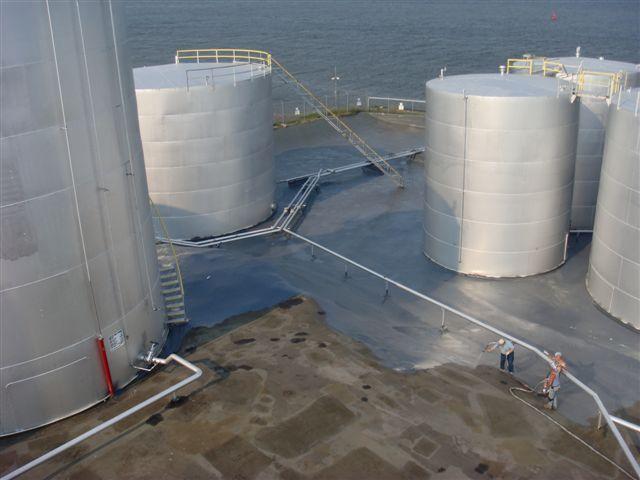
- Secondary containment and tank exteriors — mixed concrete and steel details
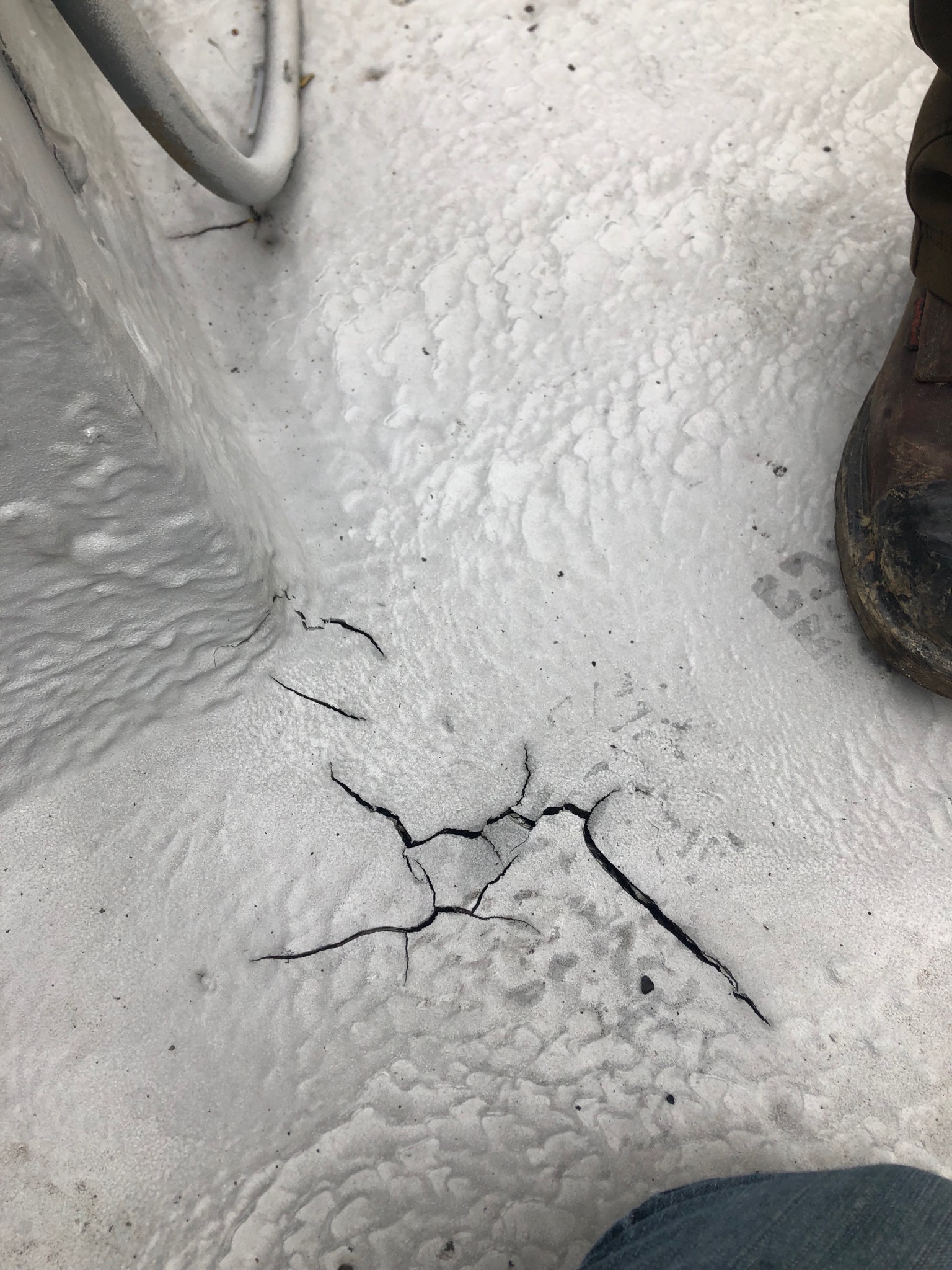
- Curbs, pipe boots, and drain surrounds — where three substrates meet in one detail
- Dock plates and trench drain frames — metal embedded in concrete
- RV and trailer roofs — under Alasta Seal over existing membrane or metal
- Galvanized fencing, railings, and structures — after white rust removal
- Maintenance overcoat of tight rust — SP3-prepped steel where blasting is impractical
- Any surface where nobody knows what is already on it — with a test patch first
Unusual Substrate?
Describe it — including the parts you are unsure about. We will tell you honestly whether to prime it, test it, or walk away from it.
Ask a TechnicianRequest 7001 Primer Pricing & Data
Tell us about your project and we will follow up with product details, technical data sheets, and pricing.