Technical Guide
Substrate by substrate: what to prep, when to prime, and how to verify it before you commit the job.
Request the Technical Data SheetWhat 7001 Primer Is
7001 Primer is a quick-setting, multi-surface adhesion primer developed to bond polyurea and other Oak Ridge coating systems to substrates that would otherwise reject them, and to block bleed-through from contaminated or previously coated surfaces.
The two properties that make it useful in the field are its substrate range and its set speed. Range means one product handles a job with a metal deck, a concrete curb, a wood blocking detail, and an old EPDM field — instead of four primers and four chances to grab the wrong pail. Set speed means the crew is not standing around, or worse, coming back tomorrow.
It is not a filler, a surfacer, or a substitute for surface preparation. It bonds to a sound, clean, dry substrate. What it will not do is stick to something that is itself not stuck — loose scale, delaminating coating, chalking that has not been washed off, or a membrane that has already lost adhesion to the deck below it.
Substrate Matrix — Prep and Priming
| Property | Value |
|---|---|
| TPO membrane | Clean and dry, remove chalking and biological growth. Prime — required. Test patch on weathered TPO. |
| EPDM membrane | Clean and dry, remove talc and surface residue. Prime — required. |
| Other single-ply membranes | Prime — required. Confirm compatibility with a test patch first. |
| Blasted steel (SP6, 2–4 mil profile) | Primer usually not required — direct polyurea adhesion > 500 PSI. |
| Power-tool cleaned steel (SP3) | Prime recommended, particularly over tight residual rust. |
| Galvanized metal | Degrease, remove white rust. Prime — required. |
| Aluminum & metal roof panel | Degrease and remove oxidation. Prime — required, and prime laps and fasteners. |
| Concrete & masonry | Profile CSP 3–5, verify moisture vapor emission. Prime — recommended, required if stained. |
| Oil-contaminated concrete | Degrease with Super Orange Cleaner, then grind, then prime to block bleed-through. |
| Wood & plywood | Dry, sound, free of loose fiber. Prime — required; also blocks tannin bleed. |
| Asphalt / bituminous | Prime — required to block bleed-through into the finish coat. |
| Previously coated / unknown finish | Wash, abrade, prime — and run a test patch with pull test before committing. |
| Application methods | Roller, brush, or sprayer depending on surface and area. |
| Recoat window | Topcoat within the window stated on the technical data sheet. |
Priming Single-Ply Roofs
This is the highest-value use of the product and the one with the least margin for error.
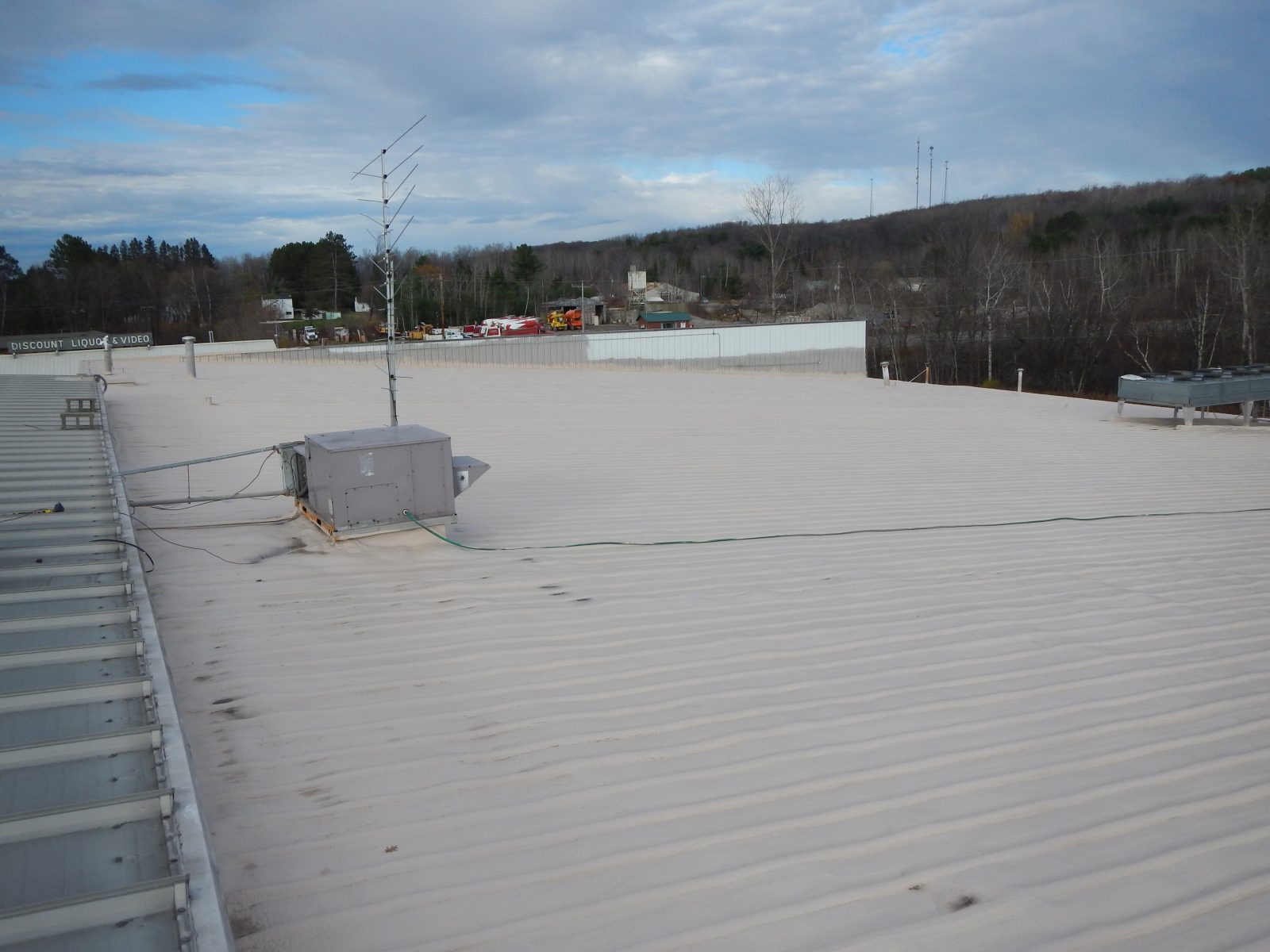
Clean first, and mean it. A weathered TPO roof carries chalked surface polymer, atmospheric dirt, and biological growth. All of it is a bond breaker. Pressure wash with an appropriate cleaner, rinse thoroughly, and let it dry — moisture trapped under a primer is a blister waiting to happen.
Test before you commit. Membranes vary by manufacturer, formulation year, and how they have weathered. Prime a small area, let it set, topcoat it, and pull-test it. Ten minutes on a test patch is cheap compared with re-doing forty thousand square feet.
Watch the seams and the fasteners. Any seam that has already opened is a substrate defect, not a coating problem. Repair it before priming — the primer will bond a coating to the membrane, but it will not reattach a membrane that has released from the deck.
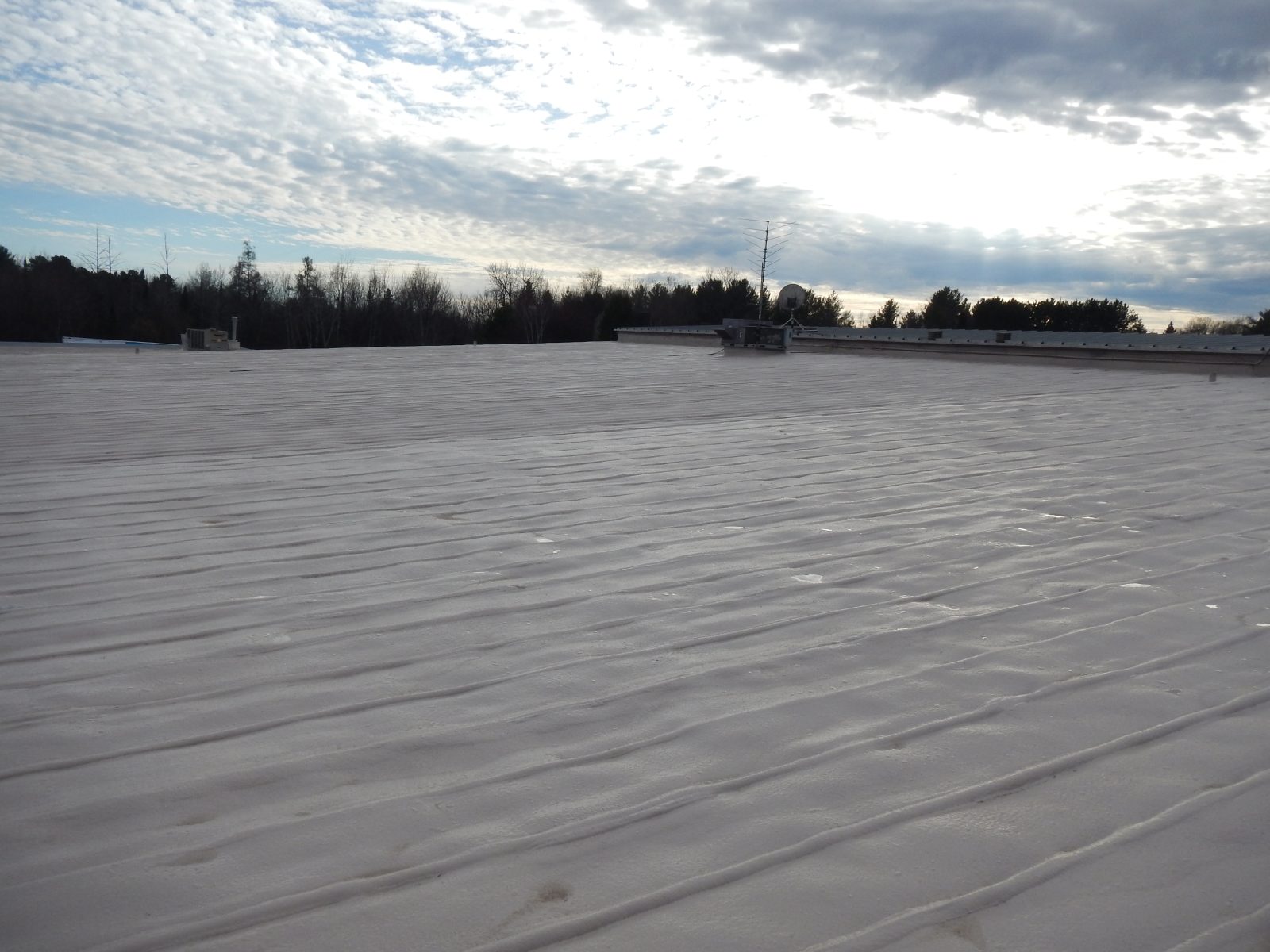
Sequence: clean · dry · repair defects · test patch and pull test · 7001 Primer over the full field and all details · OR-80SLM at 40–60 mil DFT within the recoat window.
Priming Metal — Panels, Laps & Fasteners
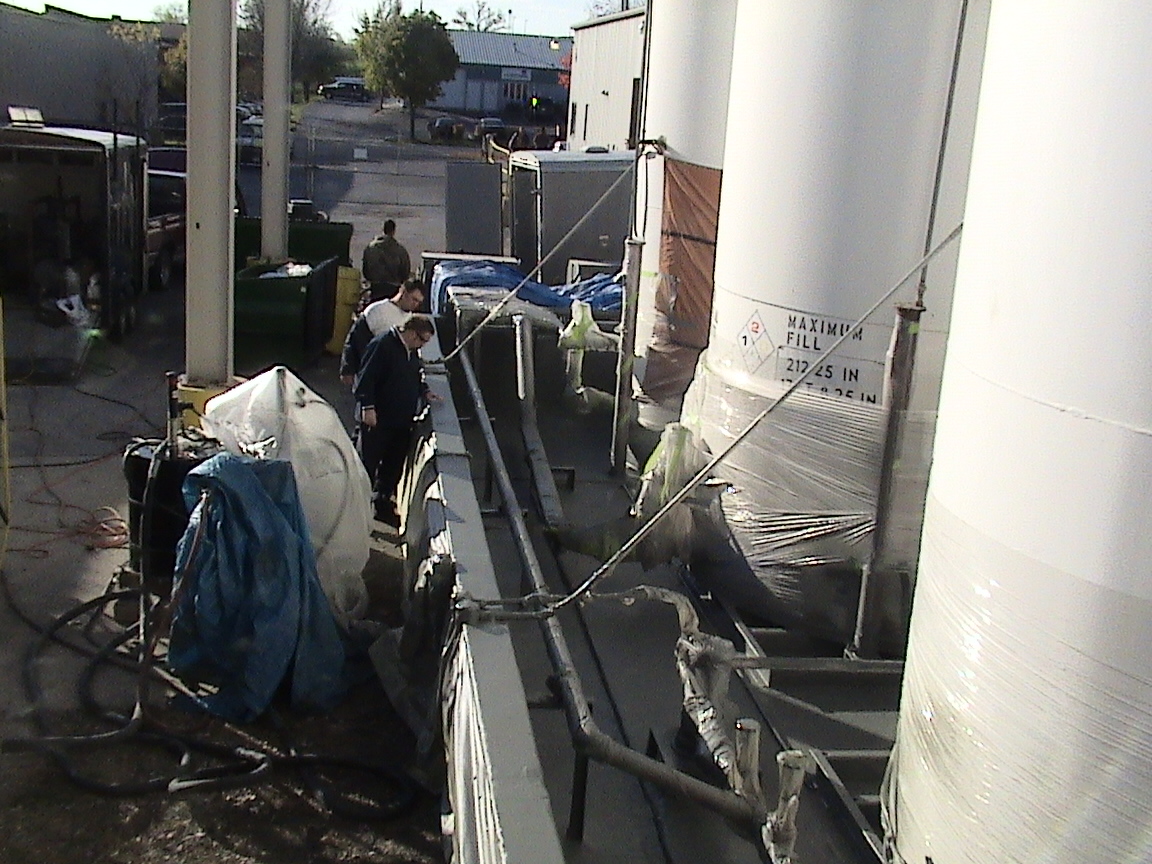
On metal roofs and buildings, the primer earns its keep at the details rather than in the open field.
Factory-finish metal panel is smooth, coated, and often has residual mill oil or silicone from manufacturing. It also has hundreds of fastener heads and every panel lap — which is precisely where water gets in and where a coating needs the most adhesion.
Degrease the panel, remove any loose oxidation, and prime the full surface with particular attention to laps, fastener heads, and the raised ribs where a spray pass thins out naturally.
Galvanized deserves a specific caution: new galvanizing carries a passivation treatment and older galvanizing develops white rust. Both are bond breakers and both have to be dealt with before priming.
Sequence: degrease · remove loose oxidation and white rust · 7001 Primer full field with laps and fasteners double-coated · OR-80SLM at 40–60 mil DFT, or FJ1 at 60–80 mil where hail impact is a design factor.
Priming Concrete, Wood & Mixed Details
Concrete. Profile mechanically to CSP 3–5 and verify moisture vapor emission first — a primer does not solve a slab that is pushing water upward. Where the slab is oil-stained or previously coated, prime specifically for bleed-through control ahead of the OR-621 basecoat.
Wood. Trailer decks, dock plates, roof blocking, and plywood substrates all take polyurea well once primed. Beyond adhesion, the primer blocks tannin bleed, which is what turns a white coating over new wood into a brown-streaked one.
Mixed details. The real argument for a multi-surface primer is a curb detail where a metal cap meets a wood blocking edge meets a concrete parapet within eighteen inches. With one primer that whole detail is a single operation. With substrate-specific primers it is three products, three cure windows, and a transition line that will fail.
Sequence: prep each substrate to its own standard · 7001 Primer continuous across the entire detail · topcoat continuous across the detail within the recoat window.
Test Patch & Pull Test Protocol
Any time the substrate is a weathered membrane, a previously coated surface, or a finish nobody can identify, run this before you commit the job. It takes very little time and it has saved a lot of roofs.
- 1. Clean a representative area exactly the way you intend to clean the whole roof or floor. Do not clean the test area better than you plan to clean the job — that produces a result you cannot reproduce.
- 2. Let it dry fully. Trapped moisture under a primer will read as an adhesion failure that is really a moisture failure.
- 3. Apply 7001 Primer at the specified coverage rate, and observe how it wets out. Beading or crawling means contamination is still present.
- 4. Topcoat within the recoat window with the actual product the job will use, at the actual specified thickness.
- 5. Let it cure, then pull it. A pull-off adhesion tester gives you a number; in the field a scored-and-peeled test tells you most of what you need — whether it releases cleanly from the substrate or tears within the coating.
- 6. Read the failure mode. Cohesive failure within the coating or within the substrate is a good result. Clean adhesive release at the primer-to-substrate interface means stop and call us before you mobilize a crew.
Troubleshooting
Primer beads up or crawls. Surface contamination — oil, silicone, or residual cleaner. Re-clean and rinse thoroughly. This is the substrate telling you something before it costs you money.
Blisters under the topcoat. Almost always trapped moisture: a damp substrate, dew that formed overnight, or a slab pushing vapor. Check substrate moisture and dew point, not just air temperature.
Topcoat lifts cleanly at the primer interface. Either the substrate was not sound to begin with, or the recoat window was missed. Past the window, abrade and re-prime.
Discoloration weeks after completion. Bleed-through — the primer coverage was thin or a stained area got skipped. On dark, oily, or bituminous substrates under a light finish, apply generously and do not spot-prime.
Poor set in cold conditions. Substrate temperature governs, not air temperature. A slab or deck lags ambient by hours. Check the surface.
Need the Full Technical Data Sheet?
Coverage rates, recoat windows, temperature limits, and the safety data sheet — sent over the same day.
Request DocumentationRequest 7001 Primer Pricing & Data
Tell us about your project and we will follow up with product details, technical data sheets, and pricing.